Protocol with the National Water Research Center
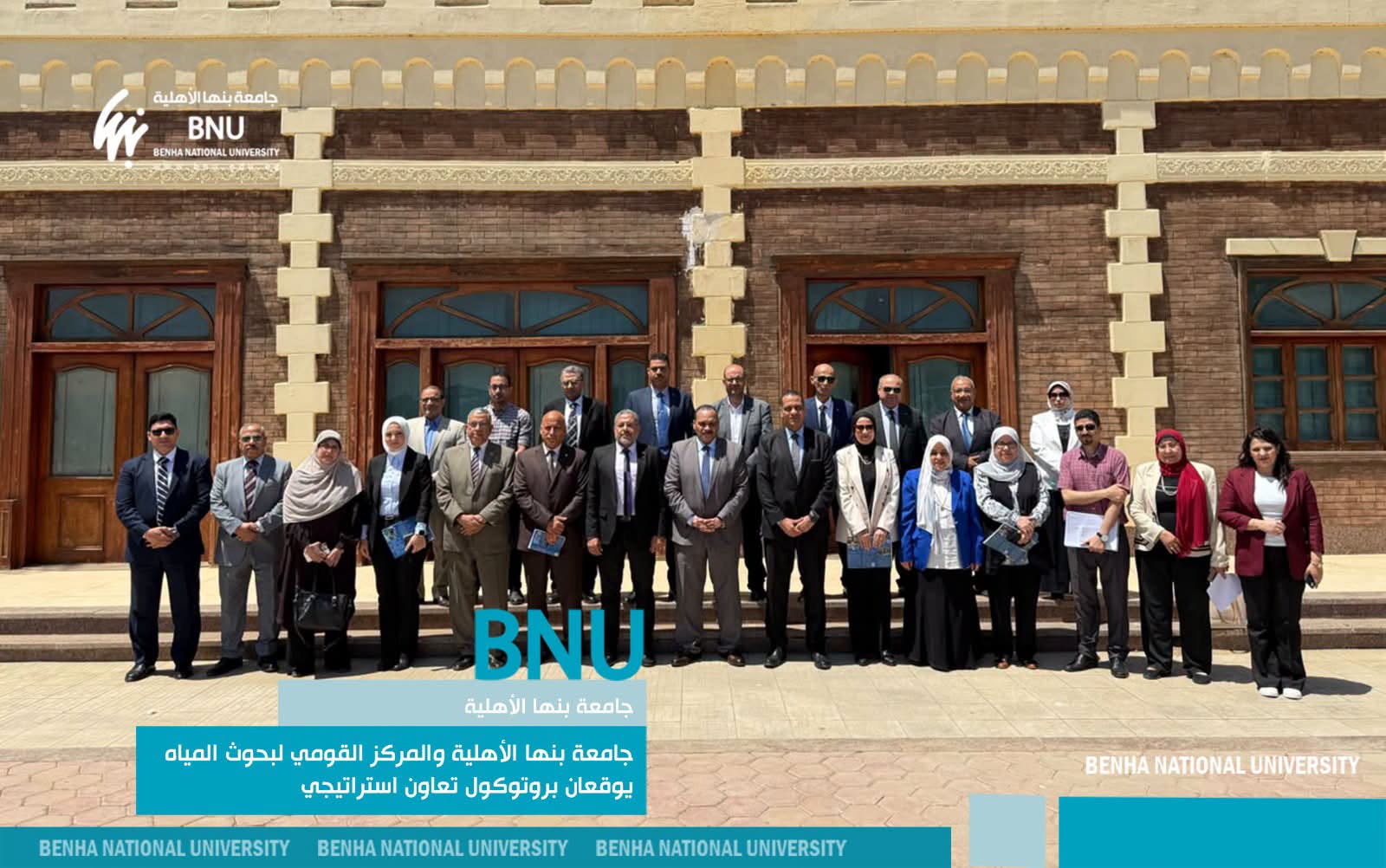
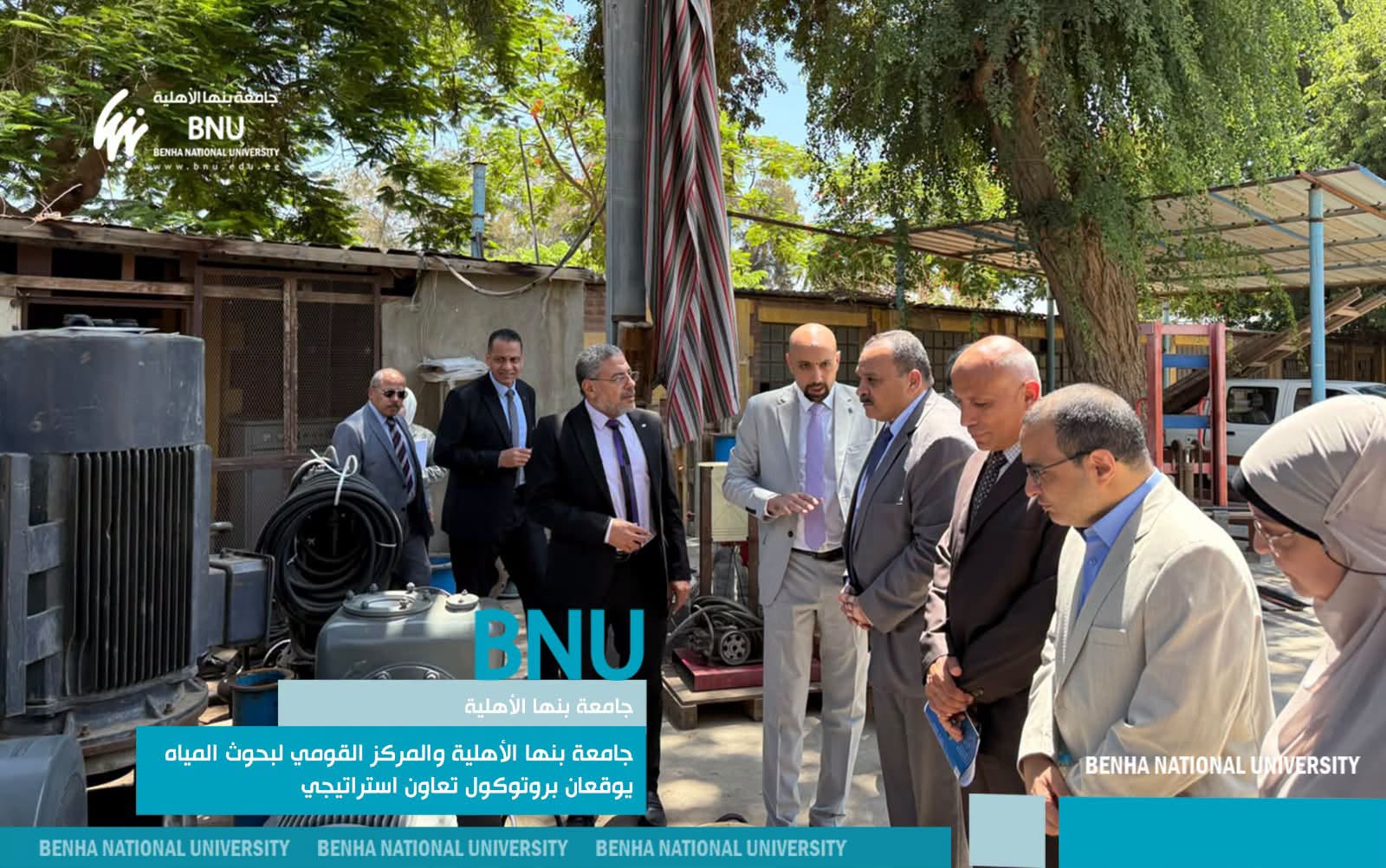
Benha National University and the National Water Research Center Sign a Strategic Cooperation Protocol
President of Benha National University: "Collaborating with institutions that monitor the state's real challenges and provide scientific solutions is the path to building knowledge-producing universities capable of shaping the future."
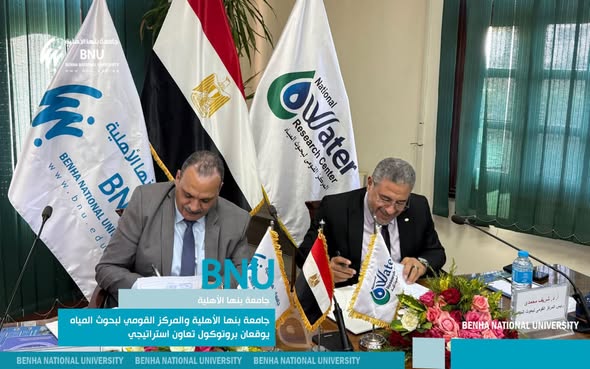
Within the framework of Benha National University’s (BNU) strategy to strengthen partnerships with leading national research institutions and support the applied scientific research and innovation ecosystem, Dr. Tamer Samir Mahmoud, President of BNU, and Dr. Sherif Mohamady El-Sayed, President of the National Water Research Center (NWRC), signed a strategic cooperation protocol. The signing took place at the NWRC headquarters in El-Qanater El-Khayreya. The protocol aims to unify efforts in scientific research, innovation, training, and technical consultations, as well as to prepare qualified cadres capable of contributing to facing national challenges, particularly in the water resources sector.
Dr. Tamer Samir Mahmoud emphasized that BNU adopts a vision based on linking education with applied scientific research and building strategic partnerships with national houses of expertise. He noted that cooperating with the NWRC represents a strategic addition to the university, not only due to the Center's advanced scientific and research capabilities but also because it is one of the most important national institutions that monitor the real challenges facing the state. It studies these challenges with a scientific methodology and provides solutions and recommendations upon which national projects and decision-making processes rely.
He added that collaborating with institutions operating at the heart of national issues, possessing the ability to diagnose challenges and develop scientific solutions, is the way to build knowledge-producing universities capable of shaping the future. He affirmed the university's keenness to provide its students and researchers with opportunities for direct exposure to real-world issues, transforming research ideas into practical applications that serve the community and enhance the university's role as an active partner in achieving the Sustainable Development Goals (SDGs) and Egypt Vision 2030.
On his part, Dr. Sherif Mohamady El-Sayed stated that the cooperation protocol with BNU represents a significant step toward maximizing the utilization of both parties' scientific and research capabilities. It expands the scope of cooperation in implementing research and applied projects that serve the state's priorities. He pointed out that the Center is keen on building effective partnerships with Egyptian universities to prepare scientific cadres capable of facing future challenges and translating scientific research outcomes into practical solutions that support the state's efforts in achieving water security and sustainable development.
The signing ceremony was attended by Dr. Mahmoud El-Refaey, Programs Director at the Faculty of Engineering; Dr. Mohamed Anwar, Director of the Continuing Education Center; and Dr. Samah Samir, Supervisor of the Production Workshops at BNU. From the NWRC, attendees included Dr. Ayman El-Saadi, Vice President for Research Plan Affairs; Dr. El-Sayed Dowidar, Director of the Hydraulics Research Institute (HRI); and Dr. Abdel Azim Mohamed, Professor Emeritus at HRI and the coordinator and focal point between the Center and BNU, along with several NWRC leaders and researchers.
The visit began with an official session, followed by a presentation by Dr. Ayman El-Saadi. He reviewed the scientific and research capabilities possessed by the Center, including its specialized research institutes and advanced central laboratories. He highlighted the NWRC's role as the research arm of the Ministry of Water Resources and Irrigation, responsible for conducting studies and research that support water resources management and decision-making, in addition to the prominent national projects the Center contributes to and future cooperation opportunities with BNU in scientific research, training, and innovation.
Following the presentation, the two sides signed the cooperation protocol, which aims to implement joint research projects, exchange scientific and academic expertise, jointly supervise postgraduate theses, and organize conferences, seminars, workshops, and training courses. It also aims to provide practical training opportunities for university students within the Center's research institutes, contributing to the preparation of cadres equipped with scientific and practical expertise and linking scientific research outputs with real-world challenges and state needs.
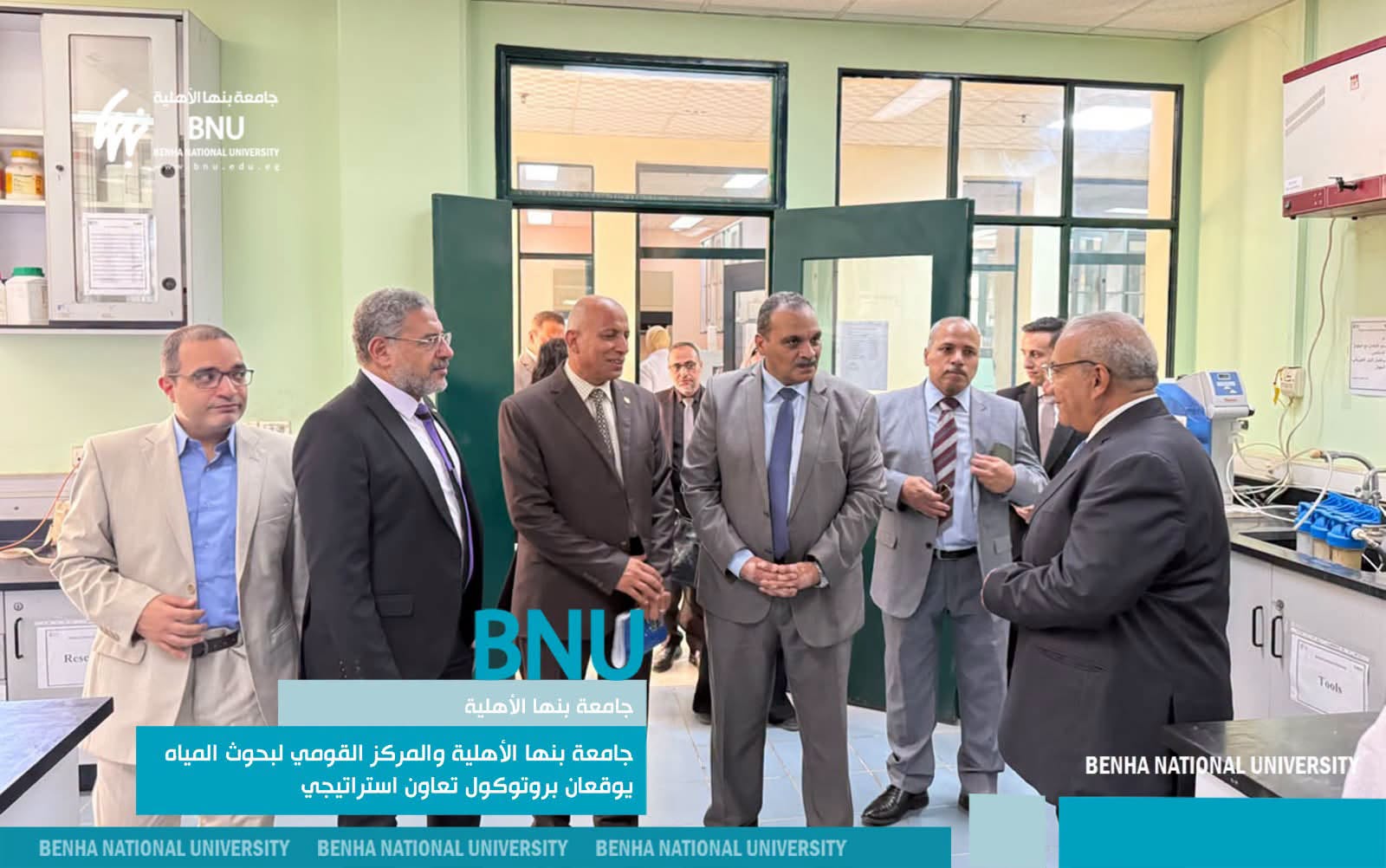
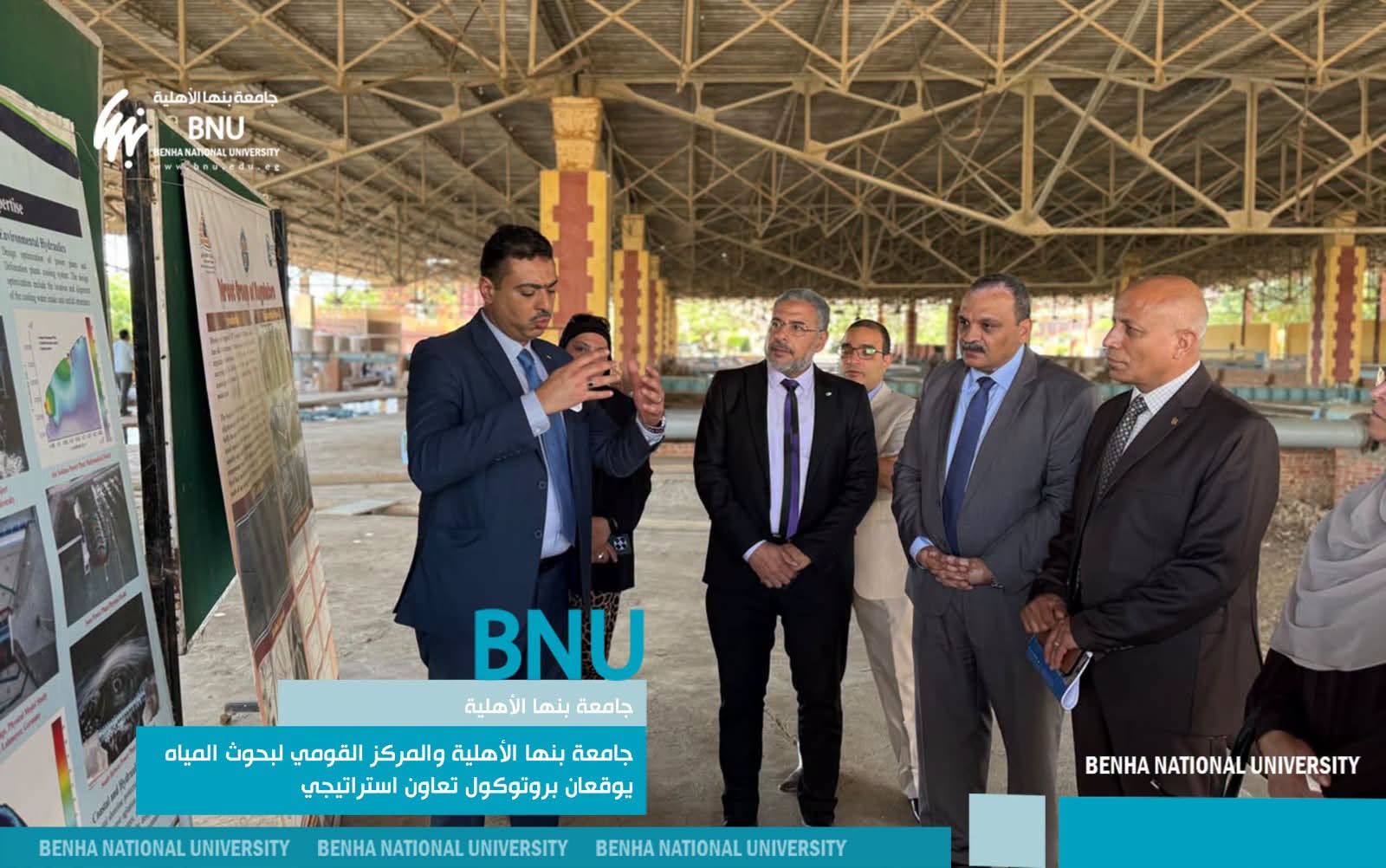
After signing the protocol, the BNU delegation conducted an extensive field tour of several research institutes and laboratories affiliated with the NWRC. During the tour, they reviewed the advanced scientific and technological capabilities of the Center, which make it one of the largest specialized houses of expertise in water sciences at both the regional and international levels.
The tour included visits to the Central Laboratories for Environmental Monitoring, the Sea Water Desalination Research Lab affiliated with the Strategic Research Unit, the Research Farm of the Water Management Research Institute, and the Climate and Environmental Risk Assessment Lab of the Environment and Climate Change Research Institute. They also visited the Barrage Models Hall and the Pump Calibration Hall at the Hydraulics Research Institute, as well as the laboratories of the Mechanical and Electrical Research Institute. The delegation listened to detailed explanations regarding the latest experiments, research models, and scientific applications implemented by the Center to support national projects, reflecting the magnitude of the Center's advanced research capabilities and its pivotal role in supporting the state's plans for managing water resources.
The visit also featured extensive discussions between the leaders of both sides regarding the mechanisms for activating the cooperation protocol. They discussed developing an executive action plan to launch joint projects, exploring opportunities to leverage the Center's research expertise in supporting the educational process at BNU, and linking graduation projects and applied research with national challenges. The discussions also covered cooperation in the fields of water resources management, engineering, energy, sustainability, climate change, and artificial intelligence (AI) applications in natural resources management.
Both sides agreed that this protocol represents the starting point of a long-term strategic partnership based on integrating the academic capabilities of BNU with the advanced research expertise of the NWRC. This partnership aims to prepare qualified cadres, support innovation, and produce applicable scientific solutions that serve the priorities of the Egyptian state and enhance its efforts toward achieving sustainable development and water security.